![VannDigital.com (2022) [Light Banner-Viral Pro]](https://www.vanndigital.com/wp-content/uploads/vanndigitalcom-2022-light-banner-viral-pro.png)
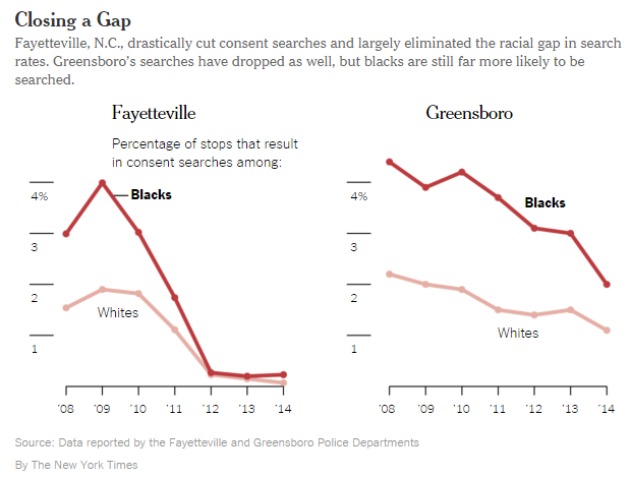
While law enforcement in North Carolina, not unlike their counterparts in New York, Chicago and elsewhere, justify their practices on the grounds that Blacks live in high-crime areas, criminal justice experts are questioning whether there are any benefits to such aggressive traffic enforcement, even noting there is no relationship between more traffic stops and lower crime rates.
The issue of racial profiling and traffic stops emerged in the 1990s, after it was learned that New Jersey state troopers concentrated their efforts on stopping drivers of color in the hopes of catching drug couriers. Since that time, dozens of state law enforcement agencies and thousands of local police departments began collecting traffic stop data. In the states with the most extensive reporting requirements — Connecticut, Illinois, Maryland, Missouri, Nebraska, North Carolina and Rhode Island — police are more likely to pull over Black drivers than white ones. However, what happens once a stop is made is even more revealing. In four states that track consent searches, police were more likely to conduct such searches when the motorist was Black, even though white drivers were consistently found to possess drugs, guns or other contraband more often. The same was found in probable-cause searches in Illinois and North Carolina, the two states that carefully record them.